
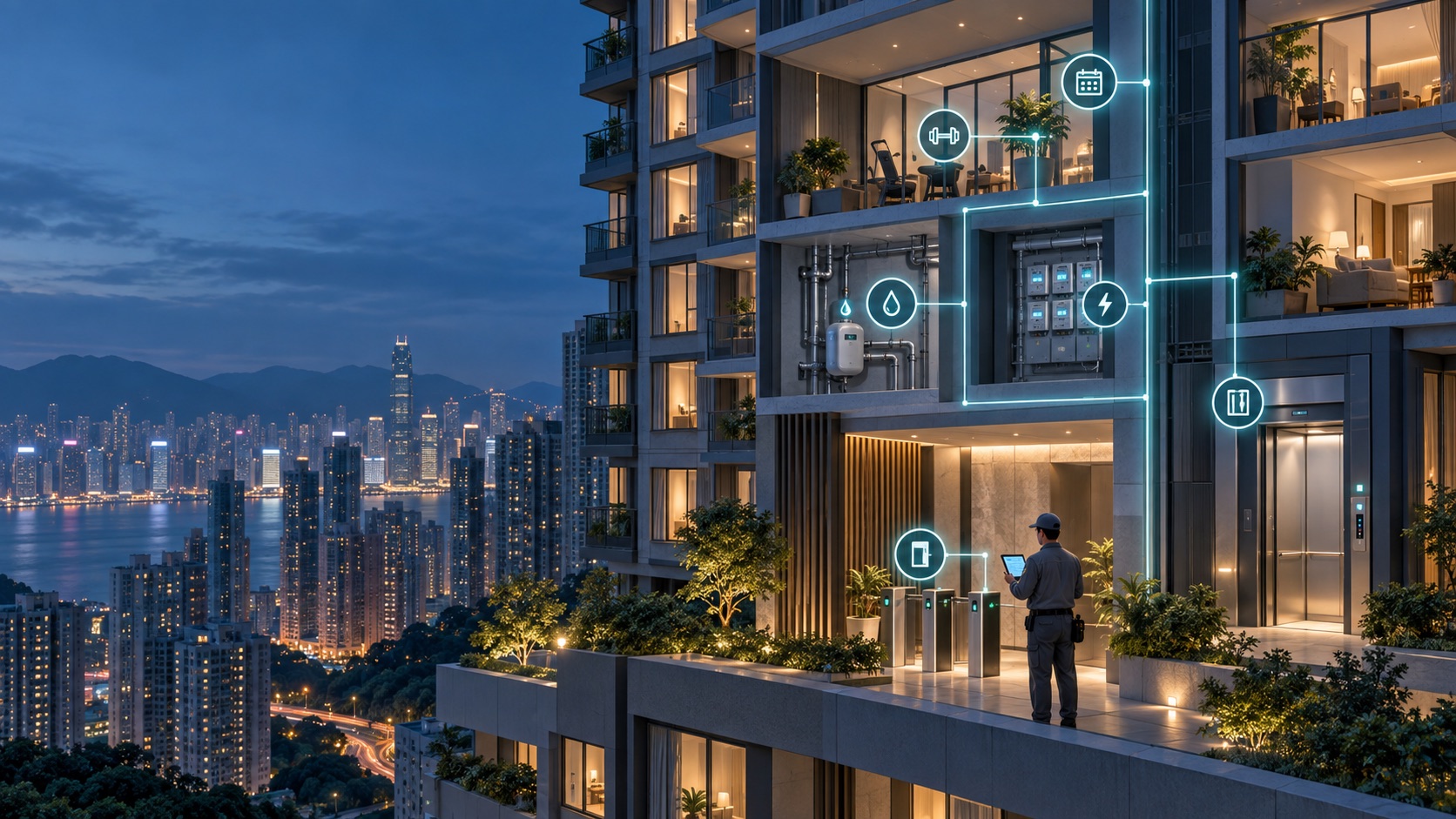
A resident reports a leak. The management office logs the unit and the symptoms, alerts a contractor, follows up on progress and updates the resident. What looks like a simple repair request can involve repeated handovers between front-line staff, the management office, technicians and residents.
Traditional property management depends heavily on experienced colleagues to connect these steps: who needs to follow up, what is urgent and whether a piece of equipment has failed in the same way before. That knowledge is often scattered across calls, paper forms, spreadsheets and personal memory.
Moving from labour to computing power is not simply a matter of putting paper forms into an app. The more meaningful change is for systems to help receive signals, organise context and flag priorities, while people make the decisions that require judgement on site.
People used to be the integration layer
In many residential and commercial properties, residents, security staff, management teams and technicians each hold part of the picture. The issue is not a lack of commitment. Information still has to be passed from person to person.
As sites grow, facilities multiply and expectations for response times rise, that model creates recurring operational pressure.
- Repeated handling: the same details are recorded and checked by several people.
- Delayed response: a supervisor cannot always see where a work order is waiting.
- Lost learning: completed cases do not reliably become evidence for prevention next time.
What computing power can do
Digital work orders, online booking, resident apps and cloud records reduce paper and phone handovers. The next step is for systems to help teams notice problems earlier.
In property management, computing power does not have to mean a complex AI model. It can be a reliable operating loop: detect, understand, decide and act.
For a water-leak case, a resident may report an issue through an app while a sensor detects an anomaly. The system can link location, time, previous records and likely impact, create a work order under agreed rules and notify the right people. Once work is complete, the cause, response time and outcome return to the record.
The value is not removing people from the process. It is reducing time spent copying information, chasing updates and relaying the same request. Staff arrive with better context, while managers can identify equipment, locations or periods that repeatedly generate exceptions.
The same approach can support facility booking, visitor registration, energy monitoring, parking and lift maintenance. More devices and dashboards without clear ownership only create another queue of work.
Human work becomes more important, not less
Automation is often mistaken for headcount reduction. Property operations still require people to assess safety risks, coordinate urgent repairs, explain arrangements to residents, handle exceptions and balance service with cost.
A system can flag unusual energy use or suggest that equipment needs inspection. It cannot decide whether a facility should close today, how to support affected residents or how to set priorities when resources are limited.
Good PropTech turns people from manual integrators into on-site decision-makers. Instead of relying on memory to chase work orders, front-line colleagues can spend more time inspecting, communicating, assessing risk and improving service.
Sustainability is more than adding sensors
Smart buildings are often discussed alongside energy saving, paper reduction and ESG. The connection is real, but it is not automatic.
Reliable records of energy, space use and equipment operation make it easier to identify waste, plan maintenance and track the result of changes. Digital work orders also improve traceability: teams can see who acted, when a case was completed and whether the same problem returns.
Technology alone does not create sustainable outcomes. If data has no clear purpose, equipment is not maintained or residents are not given a clear explanation, new systems can add cost and complexity.
Four questions to ask before implementation
A new system should not exclude older residents, visitors or people with lower digital confidence. Convenience, privacy, accessibility and accountability need to be designed together.
- Which workflow is most often delayed by manual handovers?
- When the system detects an exception, who decides, who acts and who communicates with residents?
- What data needs to be collected, and what data should not be kept?
- Can people who do not use an app still receive equally important services?
From smarter buildings to better management
The point is not to demonstrate how advanced a building is. It is to make each repair, booking, inspection and exception a useful input for improving the next service decision.
When systems handle repetitive information and highlight what needs attention, people can focus on the parts that need judgement and empathy. That is the practical meaning of moving from labour to computing power: not fewer people, but people doing work of greater value.